M.E. Rinker, Sr. Institute of Tax and Accountancy Department
If you’re a career-driven student interested in accounting, accounting information systems, or consulting, Stetson offers distinctive undergraduate and graduate experiences. Our programs meet CPA exam requirements and provide a seamless path into the Master of Accountancy.
Mission
The M. E. Rinker, Sr. Institute of Tax and Accountancy delivers a rigorous, supportive education that prepares students to become successful accounting professionals. Our programs emphasize teaching excellence, experiential learning, professional engagement, and technology integration.
AACSB Accredited Accounting
Stetson’s School of Business Administration is accredited by AACSB International—the premier standard of excellence in business education. Fewer than 190 institutions worldwide hold AACSB accreditation in accounting, recognizing programs for their quality, relevance, and continuous improvement.
Undergraduate
Undergraduate accounting majors must complete eight required major courses (including financial and managerial accounting, tax, data analytics, and accounting information systems), a non-credit, pass/fail colloquium, as well as one major elective class.
- Accounting - Major/Minor
Graduate
Master of accountancy students must complete 30 credits - a minimum of 18 of which are in graduate-level accounting courses in financial accounting, financial accounting theory, tax, governmental/not-for-profit accounting and auditing.
Our faculty has extensive real-world experience, and they are outstanding classroom teachers. They are easily accessible and will serve as your program advisors.
Over the past 20 years, members of the Institute's accounting faculty have been selected as SOBA Professor of the Year five times, Teacher of the Year twice, Service Provider of the Year ten times, Researcher of the Year twice and Innovator of the Year once. One faculty member received the JD/MBA program's Golden Apple teaching award.

Carol Callaway Dee
Department Chair
PhD, ME Rinker, Sr., Distinguished Professor
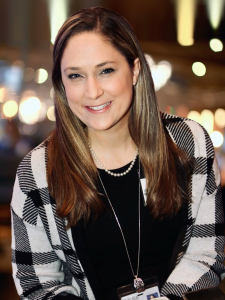

Monica Mendoza
PhD, Associate Professor of Practice in Accounting
Associate Dean

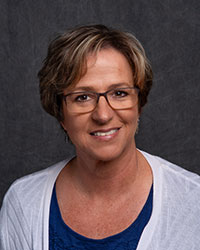
Erin Nickell
PhD, Associate Professor of Accounting
Director of the Master of Accountancy Program
Beta Alpha Psi
Beta Alpha Psi is an international Honors Society for financial information students. The purposes of Beta Alpha Psi are to:
- recognize outstanding academic achievements in the fields of accounting, finance and information systems
- promote the study and practice of professional fields related to these disciplines
- provide opportunities for self-development and association among members and practicing financial professionals
- encourage a sense of ethical, social and public responsibilities
Internships
A number of our students complete one or more internships during their time at Stetson. In fact, internships are highly recommended. Internships may be part-time or full-time, paid or unpaid, and taken during the academic year or the summer. Academic credit can be earned for internships meeting certain requirements. In recent years, our students have interned with "Big 4" and local accounting firms, corporations and governmental entities such as:
- County of Volusia
- Brown & Brown
- Deloitte
- Disney
- Ernst & Young (EY)
- International Speedway Corporation
- KPMG
- PricewaterhouseCoopers (PwC)
- Siemens
- TopBuild
- FBI
Internships Employer Resources
Scholarships
If you enter our accounting program, you may be eligible for scholarships from a variety of sources in addition to the financial aid offered through the University. Outstanding students may receive awards and partial scholarships for their academic achievements, funded by the Stetson University Endowment, the Stetson Business School Foundation and the FICPA, among others.
VITA
Through the Internal Revenue Service's Volunteer Income Tax Assistance Program, Stetson students are trained to become IRS-certified tax preparation agents who help prepare and file tax returns for families with an income limit up to $54,000, persons with disabilities and limited English-speaking taxpayers.
The student volunteers complete a two-day intensive training alongside our accounting professors. Once they complete the training, they become IRS Certified where they are then able to help identify taxpayer's eligibility for the EITC (Earned Income Tax Credit), Child Tax Credit and other federally sponsored credits and help them file accurate tax returns.
Students gain invaluable educational opportunities to learn about the challenges facing low-income families while honing their finance and accounting skills.
In 2019, Stetson's VITA program celebrated over $2,000,000 in tax returns generated for the community and over 2,000 total returns filed.
The Stetson University Accounting Hall of Fame was established to honor those retired accounting alumni, faculty and benefactors who have demonstrated significant career accomplishments, contributions to the Stetson accounting program and/or contributions to the accounting profession. The Hall of Fame was conceived by Stetson's accounting faculty, with the support of the Accounting Board of Advisers and Stetson University's administration.
The faculty, with input from the Accounting Board of Advisers and members of the Hall, carefully consider many worthy candidates. An inaugural class of nine was inducted in 2016. As many as two individuals will be inducted into the Hall each subsequent year. Each current member of the Hall has the opportunity to participate in the nomination and election of new inductees. Members of the Accounting Hall of Fame are recognized and perpetually honored through the inclusion of their name on a plaque that will reside in the M. E. Rinker, Sr. Institute of Tax and Accountancy in the Lynn Business Center.
Inductees
Membership
- Maureen Breakiron-Evans
- David Beights
- Vincent C. Brenner
- Bernadette Britz-Parker
- Joe Cooper
- Richard Copeland
- William Cross
- Paul Dascher
- Nestor de Armas
- Donna Duggar De Peyster
- William Ferrara
- Patrick Knipe
- Lance Loria
- Joseph Master
- M.E. Rinker, Sr.
- George Shierling
- Judson Stryker
School of Business
Learn more about the School of Business Administration at Stetson University
SOBAAcademic Programs
Check out all the School of Business Academic Programs at Stetson University
Programs