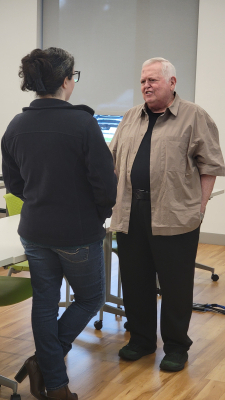
Stetson Counseling Students Learn from Counseling Leader and Alumni
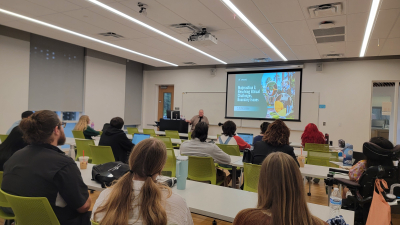
Guest experts and program alumni bring real-world perspective to the classroom this summer.
August 6, 2026
During the Summer 2026 semester, students in Stetson University's Department of Counselor Education had the opportunity to engage with both nationally recognized counseling leaders and program alumni through a series of classroom experiences designed to connect coursework with professional practice.
In Dr. Bradley McKibben's Ethical and Legal Issues in Counseling course, students welcomed Dr. Theodore P. Remley Jr., one of the counseling profession’s most influential voices on law and ethics in counseling. The visit provided students with a unique opportunity to learn directly from a scholar whose work has shaped counselor education programs across the country.
Remley is a professor of counseling at the University of Holy Cross in New Orleans and a nationally recognized leader in counseling ethics, law, and professional practice. He holds a Ph.D. in Counselor Education from the University of Florida and a J.D. from Catholic University, bringing together extensive experience as a counselor educator, licensed professional counselor, and attorney. Dr. Remley has authored numerous publications on legal and ethical issues in counseling, including the well-known textbook Ethical, Legal, and Professional Issues in Counseling used at Stetson. Remley has also founded and directed the annual Law and Ethics in Counseling Conference in New Orleans, and he is a former Executive Director of the American Counseling Association and founding president of the American Association of State Counseling Boards.
“Dr. Remley has shaped how an entire generation of counselors think about ethics and the law,” said McKibben. “It's one thing to read his work, but it’s another to have him in the classroom and listen to him unpack ethical dilemmas in real time.”
In a separate learning experience, adjunct faculty member and Stetson Double Hatter alumna Nicole King (BA '18, MS '23) hosted an alumni speaker panel for students in her Ethical and Legal Issues in Counseling course. The event brought together graduates working in a variety of counseling settings to share candid reflections about their transition from graduate student to practicing counselor.
Over the course of more than two hours, panelists discussed topics including the importance of clinical supervision, maintaining professional community and connection, managing the responsibilities that accompany counseling work, and navigating the realities of practice after graduation. Students were encouraged to ask questions and engage in open conversations about challenges, growth, and professional development.
King described the experience as providing students with what she calls a "therapist uncensored" perspective on the profession.
Experiences such as guest speakers, alumni panels, and professional engagement opportunities are an important part of the Department's commitment to preparing future counselors who are not only academically prepared, but also connected to the realities, responsibilities, and opportunities of professional counseling practice.
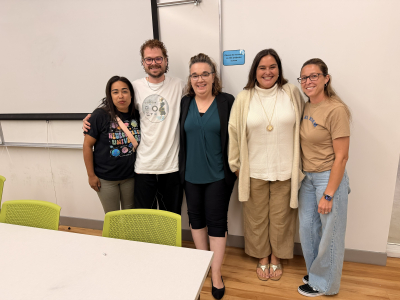
Professor Nicole King (center) welcomed alumni panelists to her ethics course:
- Melanie Strembel, LMFT
- Brandi Littler, LMHC
- Elizabeth Jordan, Registered Marriage and Family Therapist Intern
- Joseph Grimsley, Registered Mental Health Counselor Intern