
Counselor Education Student Presents Award-Winning Research at State and National Conferences
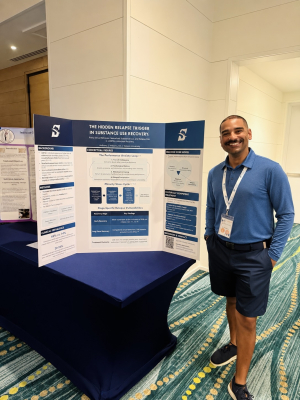
Anthony J. Williams’ research on relapse risk among LGBTQ+ individuals in addiction recovery earned second place at a statewide poster competition and recognition for engagement at a national conference.
October 14, 2026
Anthony J. Williams, a graduate student in Stetson University’s Department of Counselor Education, presented research on relapse risk among LGBTQ+ individuals in addiction recovery at two conferences this fall, earning second place in a statewide poster competition along the way.
At the Florida Counseling Association’s Annual Convention, held at Hutchinson Shores, Williams presented a poster titled “The Hidden Relapse Trigger in Substance Use Recovery: Risky Sexual Behavior, Sexualized Substance Use, and Relapse Risk in LGBTQ+ Addiction Recovery.” The research examines sexual behavior as an understudied area of relapse vulnerability among LGBTQ+ individuals in recovery from addiction. The poster earned second place in the competition, sponsored by the Florida Association for Counselor Education and Supervision.
“It was especially meaningful because it gave me the opportunity to discuss the work with counselors and other professionals who are actively encountering these issues in practice,” Williams said.
Williams also presented the same research virtually at the National Conference on Addiction Recovery Science, hosted by the Consortium on Addiction Recovery Science, where he shared his work in a three-minute video format and hosted his own question-and-answer breakout room. Williams ranked fourth overall in conference engagement on the event’s platform.
“I spoke to one participant for over 15 minutes about my research and her lived experience,” Williams said. He also attended workshops and roundtable discussions with addiction scientists, clinicians, advocates and scholars with lived recovery experience.
Williams said presenting at both conferences gave him the chance to connect with researchers, clinicians and other professionals working in addiction treatment and recovery.
“Those conversations have helped me think more deeply about how this research can translate into more culturally responsive assessment, intervention and relapse-prevention practices,” he said.
Williams’ broader research and scholarly interests include substance use and recovery, LGBTQ+ mental health, minority stress, sexualized substance use, resilience, and spirituality. Much of his current work examines factors that may increase relapse vulnerability alongside protective factors that support sustained recovery and well-being. He is also conducting a systematic review examining the effectiveness of behavioral, digital and pharmacological interventions for reducing sexualized substance use and improving recovery-related outcomes among LGBTQ+ populations.
Williams is also part of the research team at Stetson’s Center for Optimal Health Across the Lifespan, where he is leading a project examining how religious and spiritual experiences, feelings of worthiness, attachment-related spiritual experiences and moral injury may relate to self-acceptance among LGBTQ+ adults.
Williams said he hopes to pursue a doctoral degree and continue integrating his interests in research and clinical practice.
The Department of Counselor Education congratulates Anthony on these achievements and looks forward to following his continued contributions to the field.