
See It Our Way
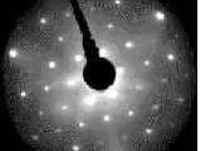
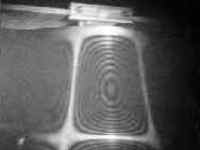
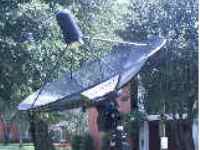
(Electron Diffraction Pattern ~ Hologram of Ringing Bell ~ Radio Telescope)
This page is meant to help you, the prospective student, get a better feel of our Department. It's been written with input from our current students and recent grads. It answers common questions we hear from prospective students, but if it doesn't answer all of yours, please don't hesitate to contact us.
Physicists see many things as they explore nature. Above we've pictured our new radio telescope used for "seeing" into the universe, a picture of a bell ringing as seen by vibrational holography, and a picture of an electron diffraction pattern caused by the atoms on the surface of a silicon crystal. All of these views can be seen in the Physics Department today!
Where is the Physics Department?
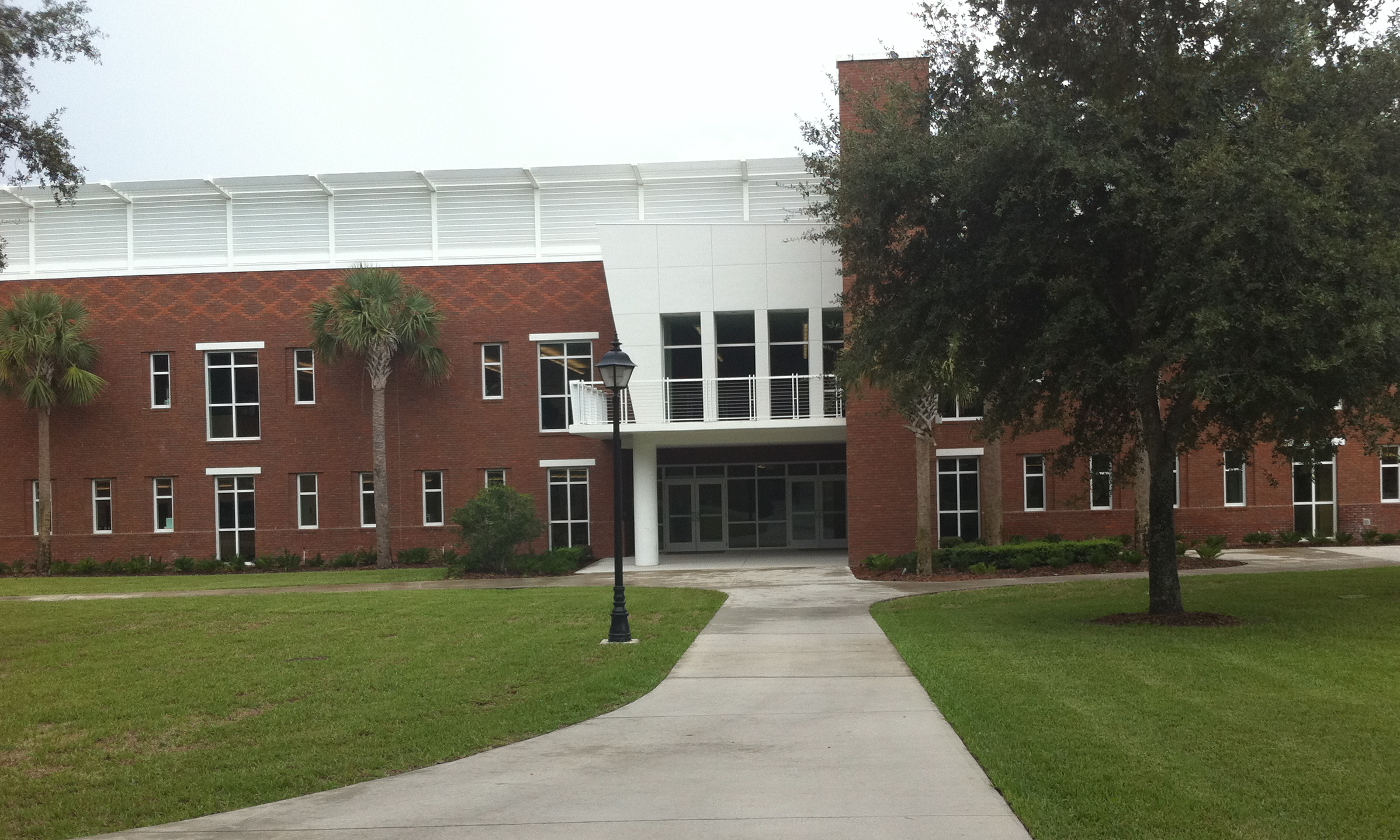 The Physics department is located on the DeLand campus, in the Sage Hall building, which we share with all the Natural Sciences departments. The administrative office is in Brown Hall 104. Call us at (386) 822 8910, or email [email protected]
What are the professors like?
We can think of several adjectives- friendly, supportive, helpful, interested in a student's success, striving for high standards But we'd prefer to have our students tell you what they think:
"This course is neat, because you get to apply your knowledge to questions you might run into in reality out of the classroom and [my professor] was always available when I needed help."
"The instructor was very effective in teaching the material and was helpful whenever I had questions."
"Although the material is complicated, [my professor] did an effective job of making it easy to understand."
Will my professor mind if I stop by to ask for help?
ABSOLUTELY NOT! That's why they are teaching at Stetson. We ask our graduating seniors, "In the fullest sense of the word, do you feel you had adequate access to the faculty?" Their responses - always just like this one: "Oh, very much so. If the faculty wasn't so helpful I probably would have given up on physics a long time ago. They are always willing to help and explain things anytime." (Ashley)
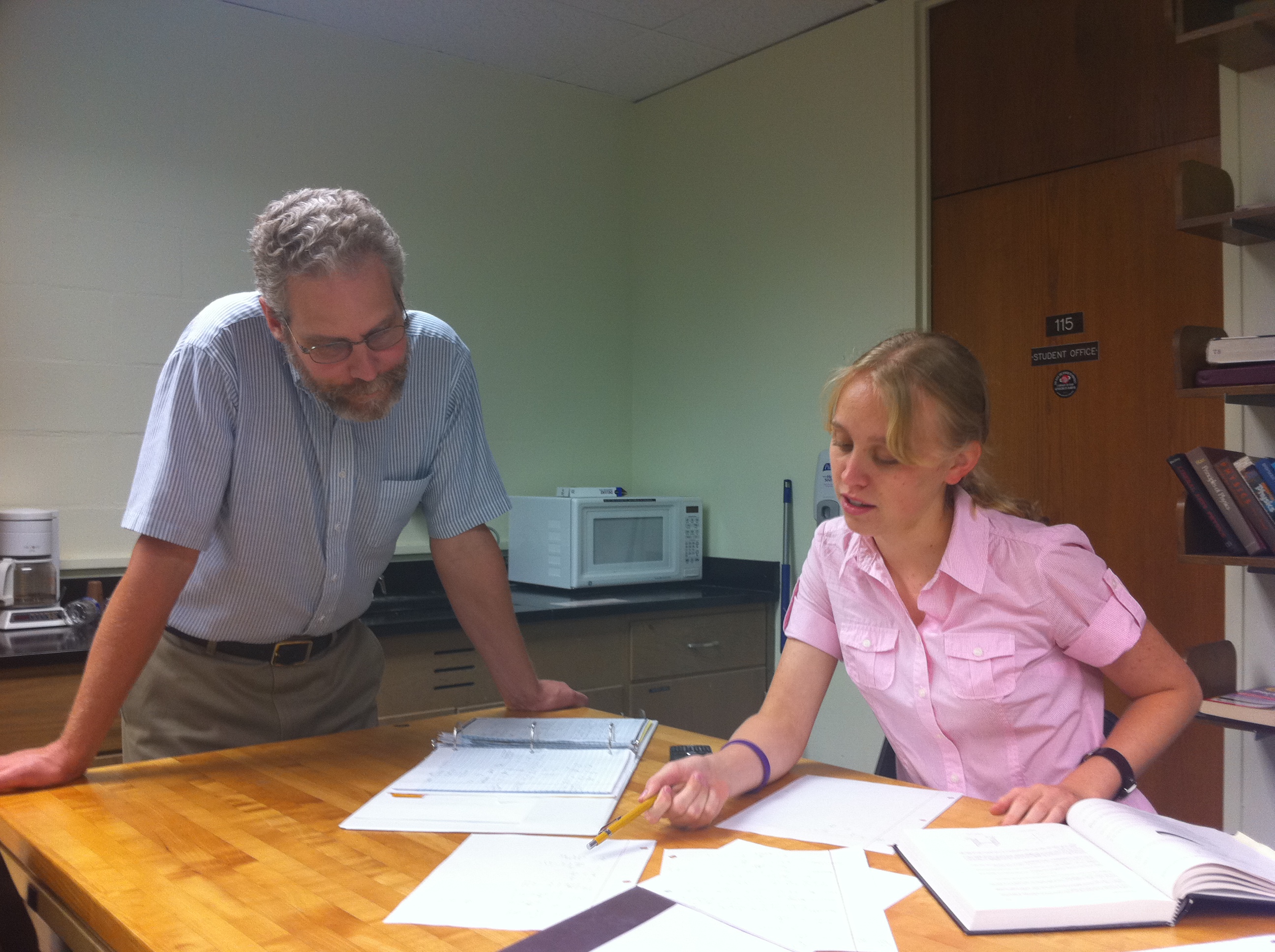 Our faculty have chosen to teach at a small, undergraduate school because they want to interact with undergraduate students. In addition to regularly scheduled office hours, our faculty all maintain open office hours - students are welcome to stop by anytime they are not in class. All students are encouraged to come by to get help with homework, to discuss research projects, to talk about the future, for advising sessions, or to get input on anything which may be affecting their lives. Don't be a stranger!
Where can I study?
First, our introductory laboratories are open whenever there are no classes scheduled in the room. Typically, that means most mornings and the occasional afternoon. This is a favorite spot of our majors - not only is it relatively quiet, but the computers are available for students to use with whatever homework assignment they might have (not just physics assignments!).
Second, there are study alcoves on the second floor of the northwest and southwest corner of the building which are very popular - equipped with Wi-Fi, a table and chairs (including a couple comfy armchairs!), a white board and large windows.
Third, we have a reading room (student lounge) on the first floor. Equipped with comfy living room furniture, lab tables, chalk boards, a fridge and a microwave, it's the place most majors prefer when working with others on an assignment.
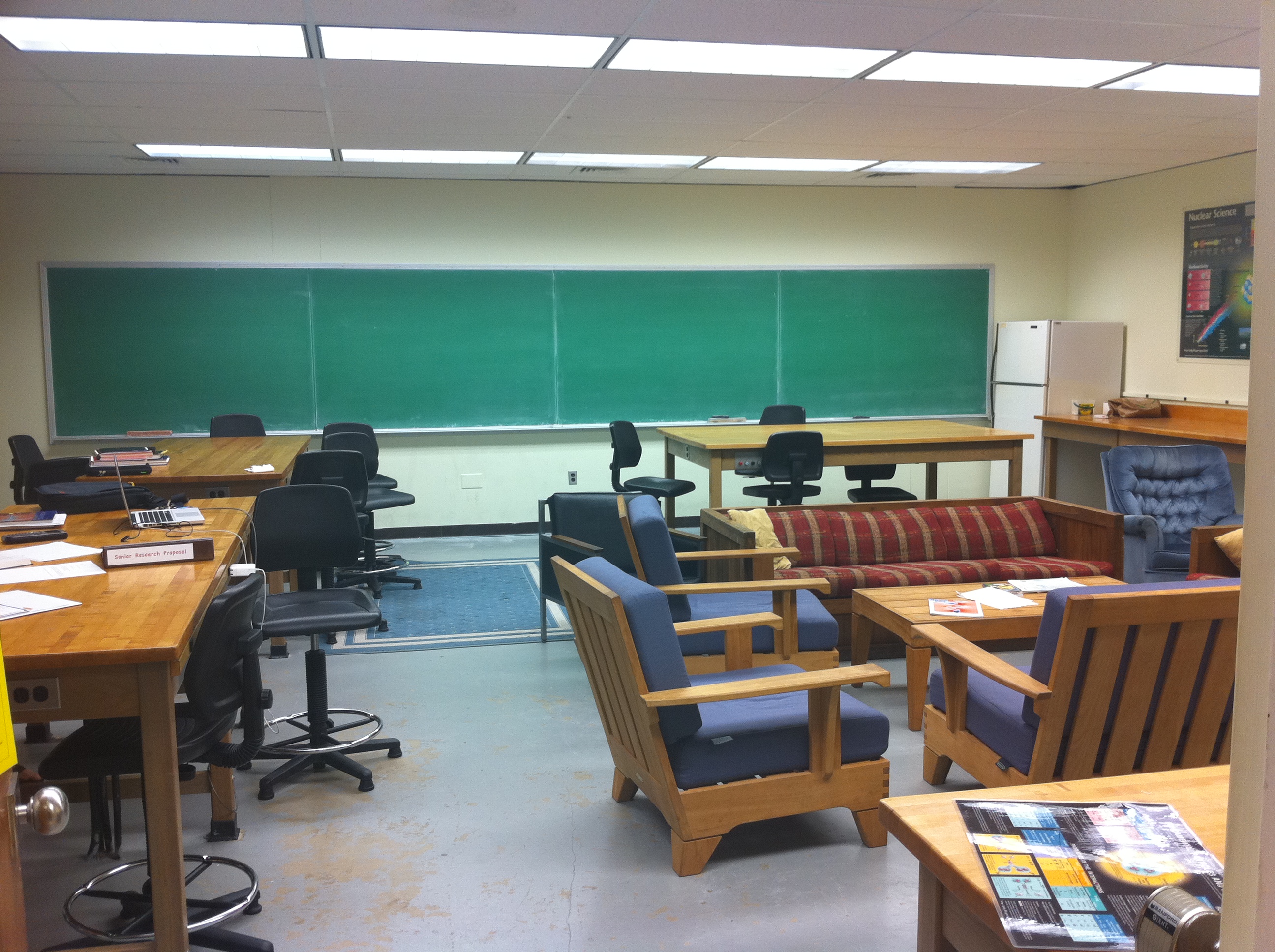 Finally, we are able to give our upper-class majors after-hours access to the building.
Tell me about research opportunities. Do we get to play with fun stuff in the lab? Can I do real research? What if I want to do more research?
Student Research is definitely a primary focus in the Department. We pride ourselves on having state-of-the-art equipment that is in place for our undergraduates. Hands-on experience starts in the introductory courses, with a weekly lab that boasts brand new computers that interface with a variety of interesting equipment. It continues with the upper division courses, many of which have labs associated with them, and we also offer two courses designed specifically to teach lab skills.
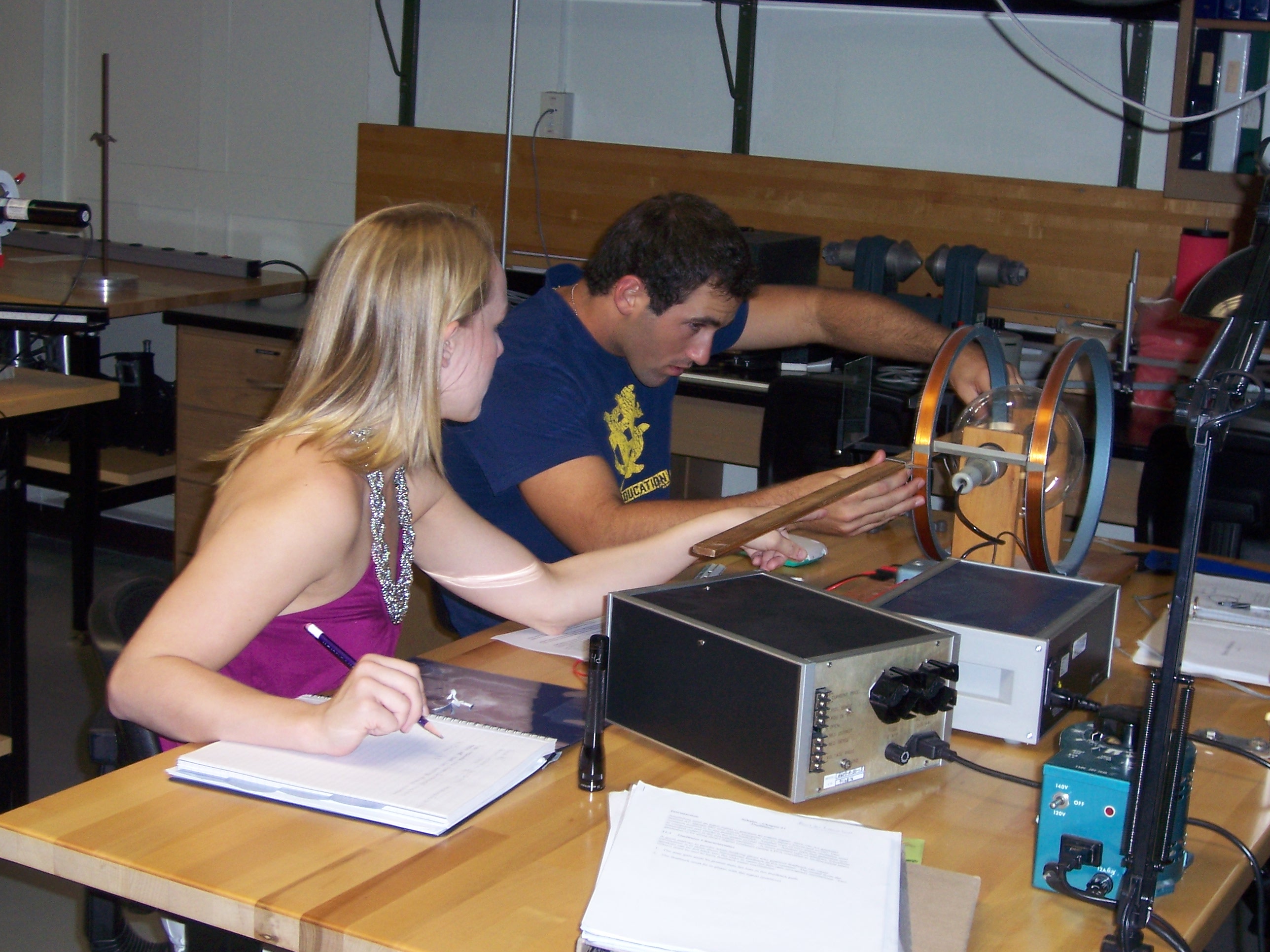
Our senior research sequence is the capstone of your major; it will take you full circle (beginning with a research proposal, through the research process, and finishing with several ways research is ultimately presented). This sequence gives you a real taste of what professional physics research is like, in addition to giving you a competitive edge if you chose to apply for a grant to support an extra research project - on campus, Stetson offers the Stetson Undergraduate Research Experience (SURE) grant, and off campus there are many Research Experience for Undergraduate (REU) programs available, and our majors have a high acceptance rate into these programs.
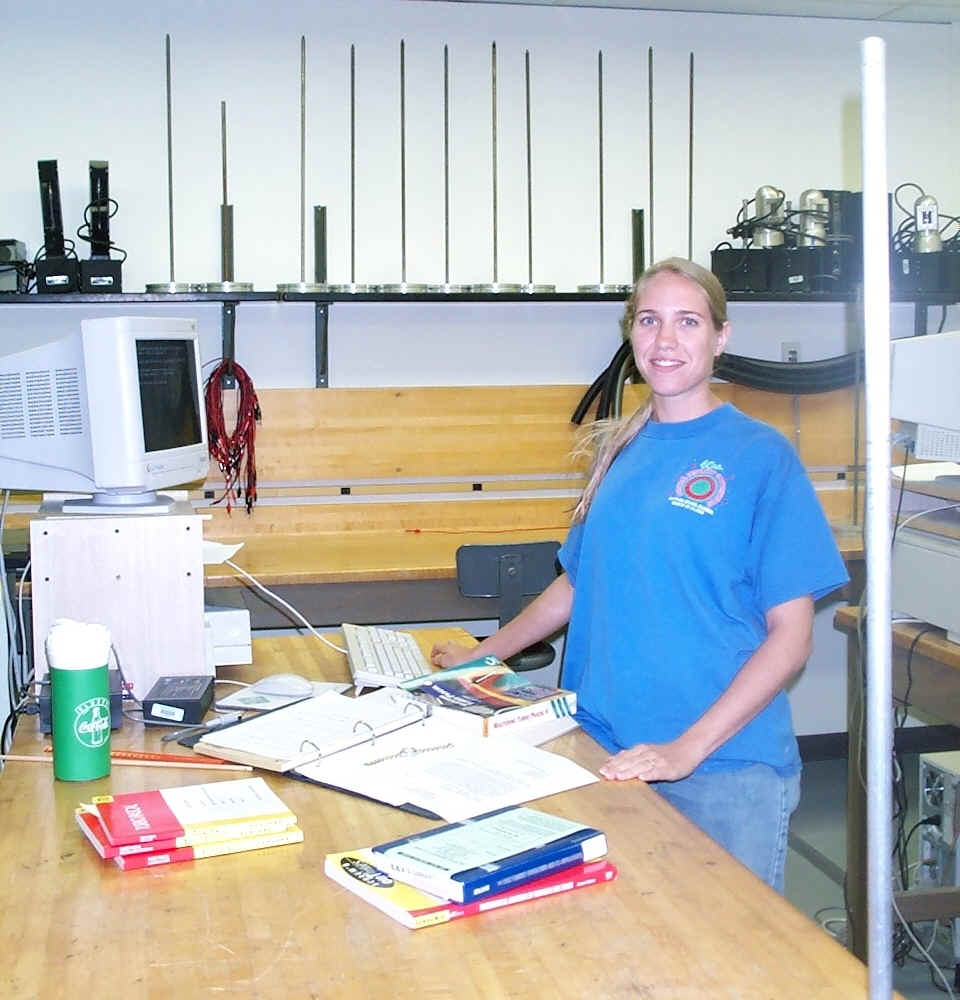
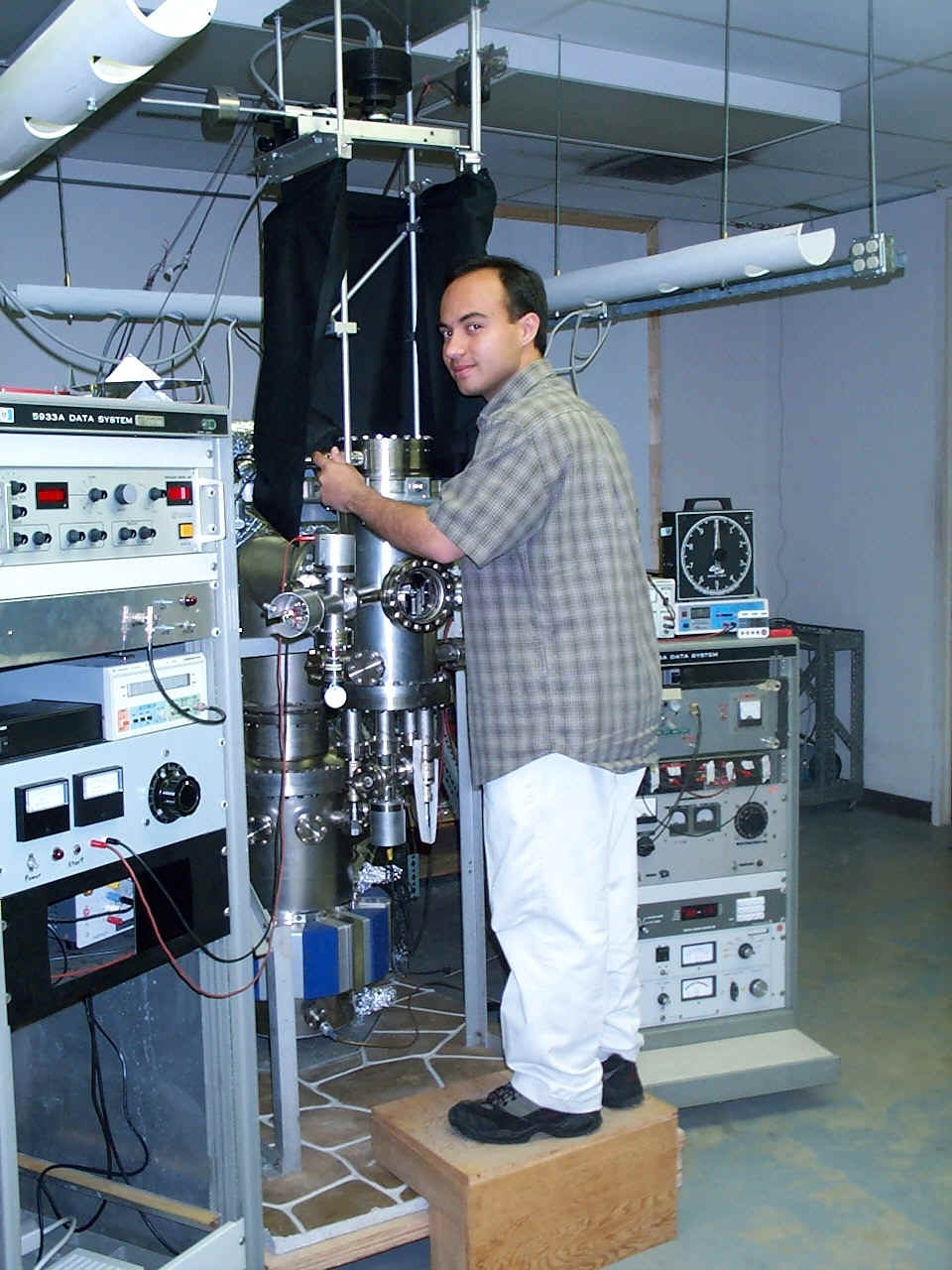
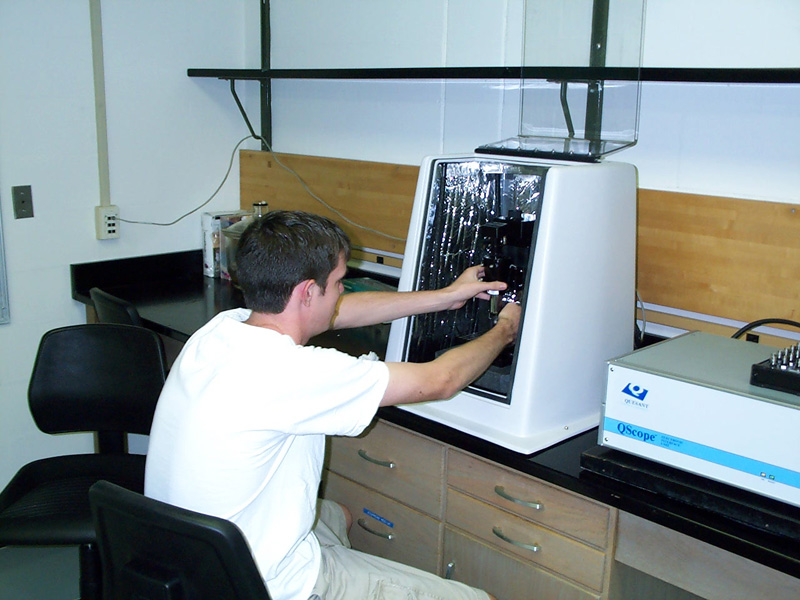
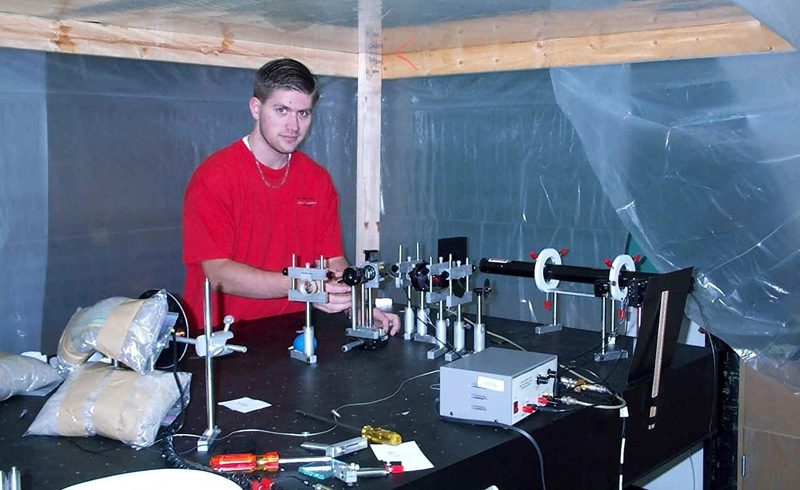
Which brings us to doing more and more research, to which we say ABSOLUTELY! Because we only have undergraduates in our department, all our equipment is dedicated to being available to you. Plus, we have a complete machine shop and professional machinist on staff to fully support whatever special equipment needs might arise. So, many of our students decide to do an expanded research project on something they find especially interesting or they get involved in the professional research of our faculty - projects falling into either of these categories may be supported by a SURE Grant - or they chose to participate in off-campus (REU) research opportunities available around the country. Our faculty are eager to support any student interested in any of these opportunities.
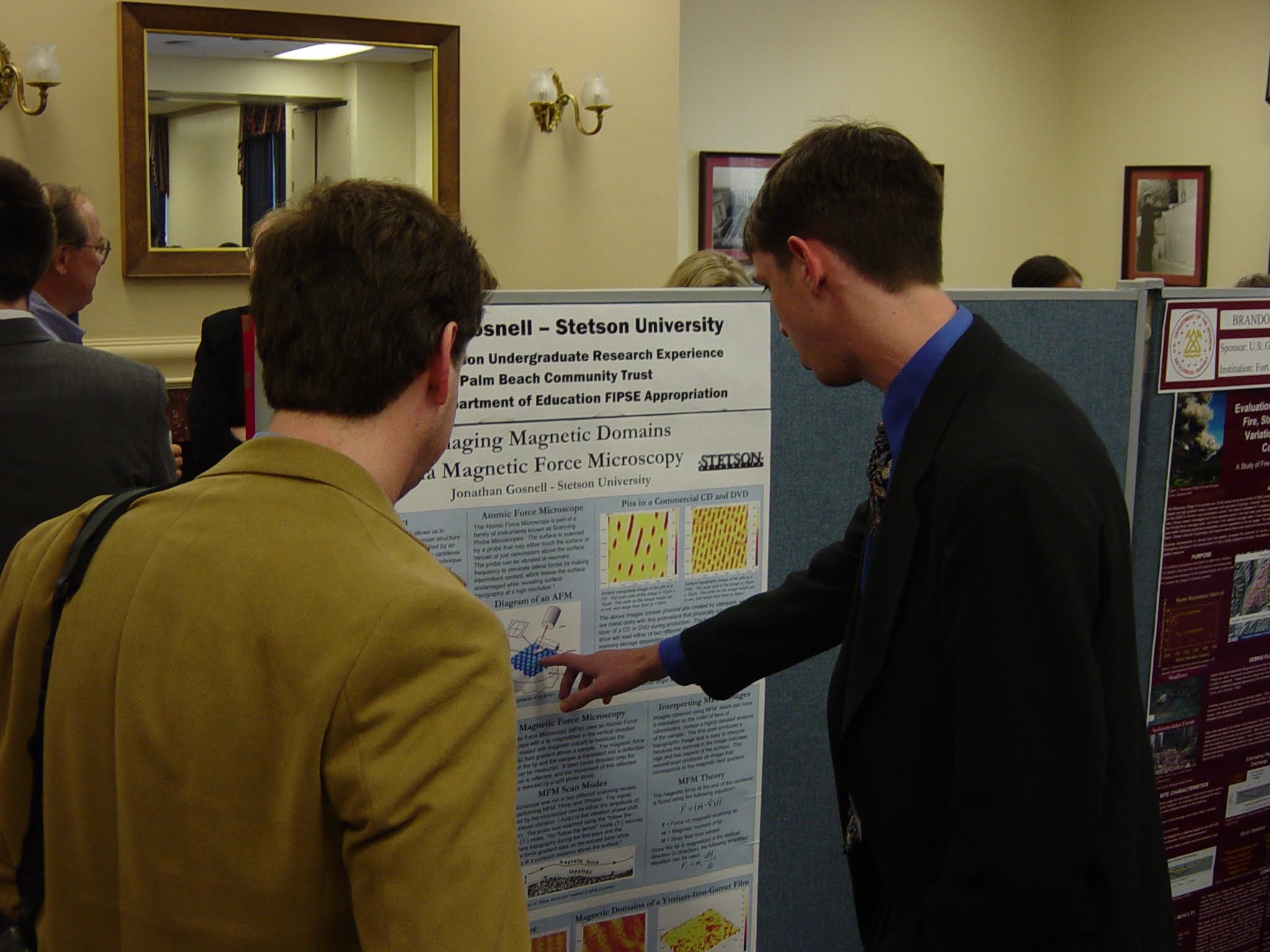
One of our students told us that "The strongest part [of the Physics program] would have to be the hands-on of the equipment I know by talking to people at other schools that they don't get that." (Yuri)
What if I want to do Engineering?
Then we're a great place to start! We offer several options-transferring after you get your foundation coursework in place, the dual-degree option, or solid preparation for graduate study in any engineering field.
The advantage of coming to Stetson and participating in our pre-engineering program is that you get solid, inclusive support from your professors at the introductory level (our introductory courses aren't designed to "weed out" anyone). The courses someone interested in engineering needs to take are the same here as at major engineering schools - except that our students report back to us that because of our smaller class sizes and attentive faculty, they felt they were better prepared than their peers who rose up through the ranks in the engineering environment. Do be sure to let us know about your interests early, so we can maximize your choices and get you heading in the right direction!
I think that I want to be pre-health. Don't I need to be a Chemistry or Biology major?
Well , Chemistry and Biology are certainly reasonable choices. But majoring in Physics is also an excellent way to go! Let one of our "featured alums," a pediatrician, explain his experience:
"I was so challenged that first week of college that I both hated and loved it. By the end of my first semester I switched my major from biology to physics and then, later, registered for a full complement of physics courses for the next year . I found in my career, I have always drawn more respect and attention because I majored in the field others feared. It helped me stand out among the multitude of predictable biology majors trying to get into medical school... I could go on about this but suffice it to say that my experience as a physics major has been an essential part of my success in my field."
Is there anything else going on in the department?
The first thing we usually do in the fall is have a pizza lunch, and we invite all our majors and everyone taking the introductory course (PHYS 141). At this informal lunch everyone can meet the new Society of Physics Students (SPS) president and discuss whatever activities SPS will be sponsoring for the year. We've had guest speakers come, field trips (the most popular was to see a night launch of the space shuttle), movie nights (where the only thing related to physics being the classroom where the movie is shown!), and every year we have star-gazing parties and a t-shirt contest (where students submit designs, vote on their favorite, and then we print them into shirts for anyone to purchase at cost).
We've asked, "Do you feel that the Society of Physics Students (SPS) was a worthwhile part of your physics experience?" And we've heard:
"Yes, cool movies, and I never turn down free pizza. Really, I liked the trip to see the night launch [of the space shuttle]....You get to see an example of what you're working towards." (April)
Life after Stetson
Our graduates have lots of options to choose from, ranging from a wide array of graduate programs to heading directly into the workforce.
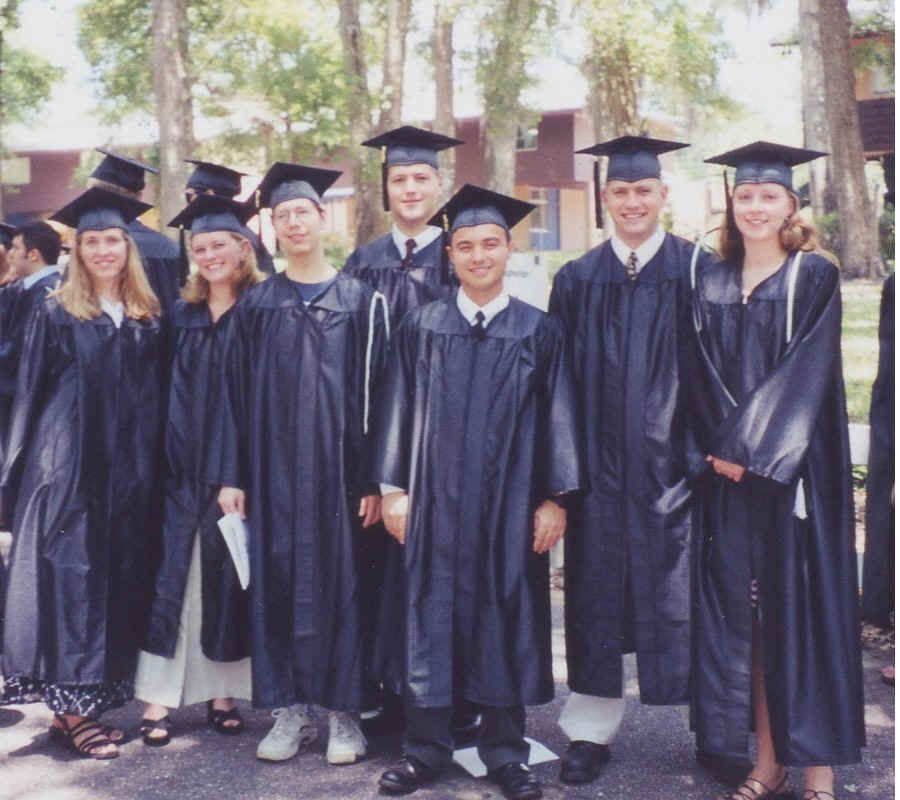
Our final question to our graduating seniors is, "What are your future plans and do you feel that your Stetson education has prepared you adequately for your career goals?" Their responses have included:
"Wake Forest University - to get my PhD in BioPhysics. I think it's the proper first step - I need further preparation and will get that in grad school." (David) "PhD in applied physics at Yale University. Yes, Stetson has prepared me for that, especially since I'm continuing in a private school. My summer research opportunities have definitely prepared me for a career in research." (Ryan)
To read more about what our graduates have to say, visit our featured alumni section.